Silk is one of the oldest known textile fibers used by humans. Its continued relevance comes from performance rather than appearance alone. As a natural protein fiber, silk combines strength, breathability, and biodegradability in ways that few materials can. Today, interest in the different types of silk fabric is also linked to sustainability, ethical sourcing, and long term material value. Understanding the different types of silk fabrics helps consumers choose responsibly across clothing, interiors, and craft applications.
What Is Silk Fabric?
Silk is a natural protein fiber produced by silkworm larvae during cocoon formation. The fiber has a triangular molecular structure that reflects light naturally, which explains silk’s soft sheen without chemical treatment.
From a materials science perspective, silk is composed mainly of fibroin, a protein that provides high tensile strength while remaining flexible. From a sustainability perspective, silk is biodegradable and renewable when produced under responsible conditions. This places silk within the broader category of Organic Fabrics, though its protein structure makes it fundamentally different from plant based fibers.
How Silk Fabric Is Made?
The process of silk production is known as sericulture. It relies on biological growth cycles rather than industrial synthesis.
Silkworms are fed specific leaves, most commonly mulberry leaves, which directly influence fiber quality. Each worm spins a cocoon made of a continuous filament that can extend hundreds of meters. In conventional silk production, cocoons are softened in hot water to release this filament, which is then reeled and twisted into yarn.
In ethical silk production methods such as Ahimsa silk, the moth is allowed to emerge before processing. This results in shorter fibers that are spun rather than reeled. The difference affects texture, insulation, and durability, which is why the different varieties of silk behave differently in real use.
Advantages of Silk Fabrics
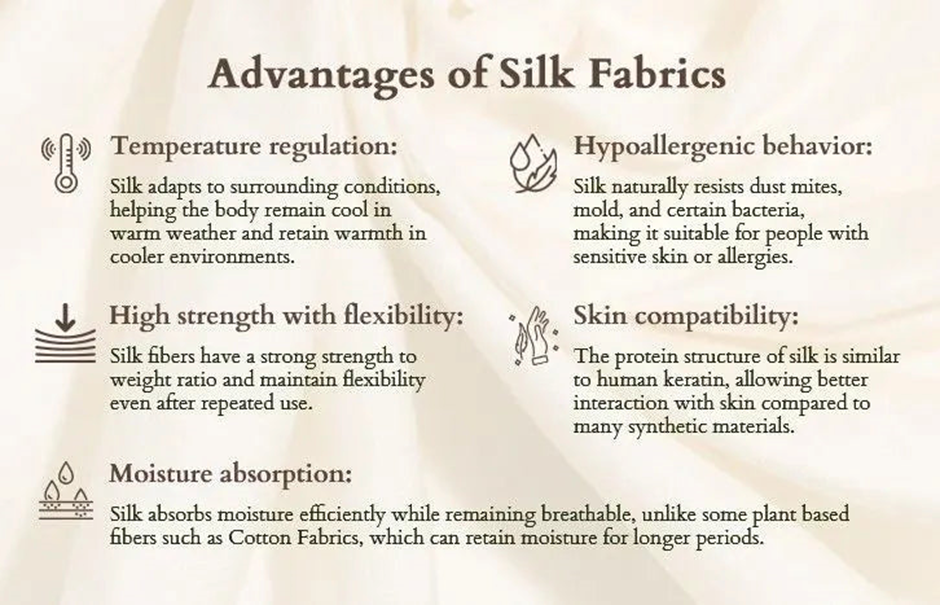
Silk offers functional advantages that come from its protein based fiber structure and natural performance characteristics. These benefits explain why silk behaves differently from synthetic textiles and many plant based fabrics.
- Temperature regulation: Silk adapts to surrounding conditions, helping the body remain cool in warm weather and retain warmth in cooler environments.
- Hypoallergenic behavior: Silk naturally resists dust mites, mold, and certain bacteria, making it suitable for people with sensitive skin or allergies.
- High strength with flexibility: Silk fibers have a strong strength to weight ratio and maintain flexibility even after repeated use.
- Moisture absorption: Silk absorbs moisture efficiently while remaining breathable, unlike some plant based fibers such as Cotton Fabrics, which can retain moisture for longer periods.
Best Types of Silk Fabrics
Silk is classified using two main criteria. One is origin, which depends on the silkworm species and its diet. The other is weaving and finishing, which determines surface texture and fabric behavior. Understanding these classifications clarifies why different kinds of silk fabric suit different purposes.
1. Mulberry Silk
Mulberry silk is produced by Bombyx mori silkworms fed exclusively on mulberry leaves. It is the most common and uniform silk type, known for its smooth texture and consistent fiber length. Mulberry silk is widely used in garments that require softness and durability.
2. Tussar Silk
Tushar silk is produced by wild silkworms that feed on forest trees. It has a natural golden tone and a coarser texture compared to mulberry silk. Tushar silk appeals to those who prefer less processed and more organic textile characteristics.
3. Eri Silk
Eri silk is produced using open ended cocoons after the moth has emerged naturally. This makes it a cruelty free option. Eri silk has a heavier feel and provides better insulation, making it suitable for cooler climates and ethical fashion choices.
4. Muga Silk
Muga silk originates exclusively from Assam in India. It has a natural golden yellow color and is known for exceptional durability. Muga silk garments are often valued for their longevity and resistance to repeated washing.
5. Raw Silk
Raw silk retains its natural sericin content, giving it a slightly coarse texture and matte finish. It is commonly used for structured garments. Raw silk aligns well with sustainable practices due to minimal chemical processing, similar in philosophy to fibers such as Linen Fabrics.
Types of Silk Based on Weaving and Finish
1. Chiffon Silk
Chiffon silk is lightweight and sheer, made using highly twisted yarns. It drapes softly and is commonly used for layered garments.
2. Georgette Silk
Georgette silk is heavier than chiffon and has a slightly crinkled surface. It offers better durability and flow, making it suitable for everyday wear.
3. Crepe Silk
Crepe silk has a textured surface created through high twist yarns. It resists wrinkling and works well for formal and professional clothing.
4. Satin Silk
Satin silk is woven to expose more threads on the surface, resulting in a smooth finish on one side. It is often used in occasion wear.
5. Organza Silk
Organza silk is lightweight and stiff, providing structure without synthetic stiffeners. It is used to add volume to garments.
6. Dupion Silk
Dupion silk is produced using double cocoons, creating natural irregularities in texture. It is valued for its structured feel.
7. Charmeuse Silk
Charmeuse silk is soft and fluid, commonly used in luxury garments that require smooth drape.
8. Habotai Silk
Habotai silk is lightweight and smooth, often used for linings and scarves. It offers comfort with minimal bulk.
How to Choose the Right Type of Silk Fabric
Selecting the right silk depends on how the fabric will be used, the desired feel, and ethical or climate considerations.
For structured garments: Raw silk, dupion silk, and organza silk provide firmness and shape, making them suitable for jackets, structured dresses, and formal wear.
For fluid silhouettes: Charmeuse, chiffon, and georgette silk offer softness and drape, which works well for flowing garments, sarees, and lightweight dresses.
For ethical considerations: Eri silk is preferred by buyers seeking non-violent production methods, as it allows the moth to emerge naturally before processing.
For climate suitability: Silk performs well across climates due to temperature regulation, offering a lighter and more breathable option compared to heavier fibers like Hemp Fabric and Wool Fabrics.
For sustainability preferences: Handloom silk is often chosen for its lower environmental impact, minimal processing, and distinct texture compared to machine made alternatives.
Caring for Different Types of Silk Fabrics
Silk needs careful handling because it is a natural protein fiber that reacts to heat, friction, and harsh chemicals.
- Washing method: Hand wash silk in cold water using a mild, pH neutral detergent. Avoid machine washing and do not use bleach or strong chemicals.
- Water temperature control: Hot water weakens silk fibers and can cause shrinkage. Always use cold water to maintain fiber strength and shape.
- Drying practices: Do not wring silk. Lay it flat on a towel or hang it in the shade. Direct sunlight can damage fibers and reduce durability.
- Ironing technique: Iron silk on the reverse side while it is slightly damp. Use a low heat setting to prevent fiber damage.
- Care comparison: Silk requires more careful maintenance compared to durable plant fibers such as Kala Cotton Fabrics, but proper care significantly extends its usable life.
0 Comments for “A Guide to Silk Fabrics”